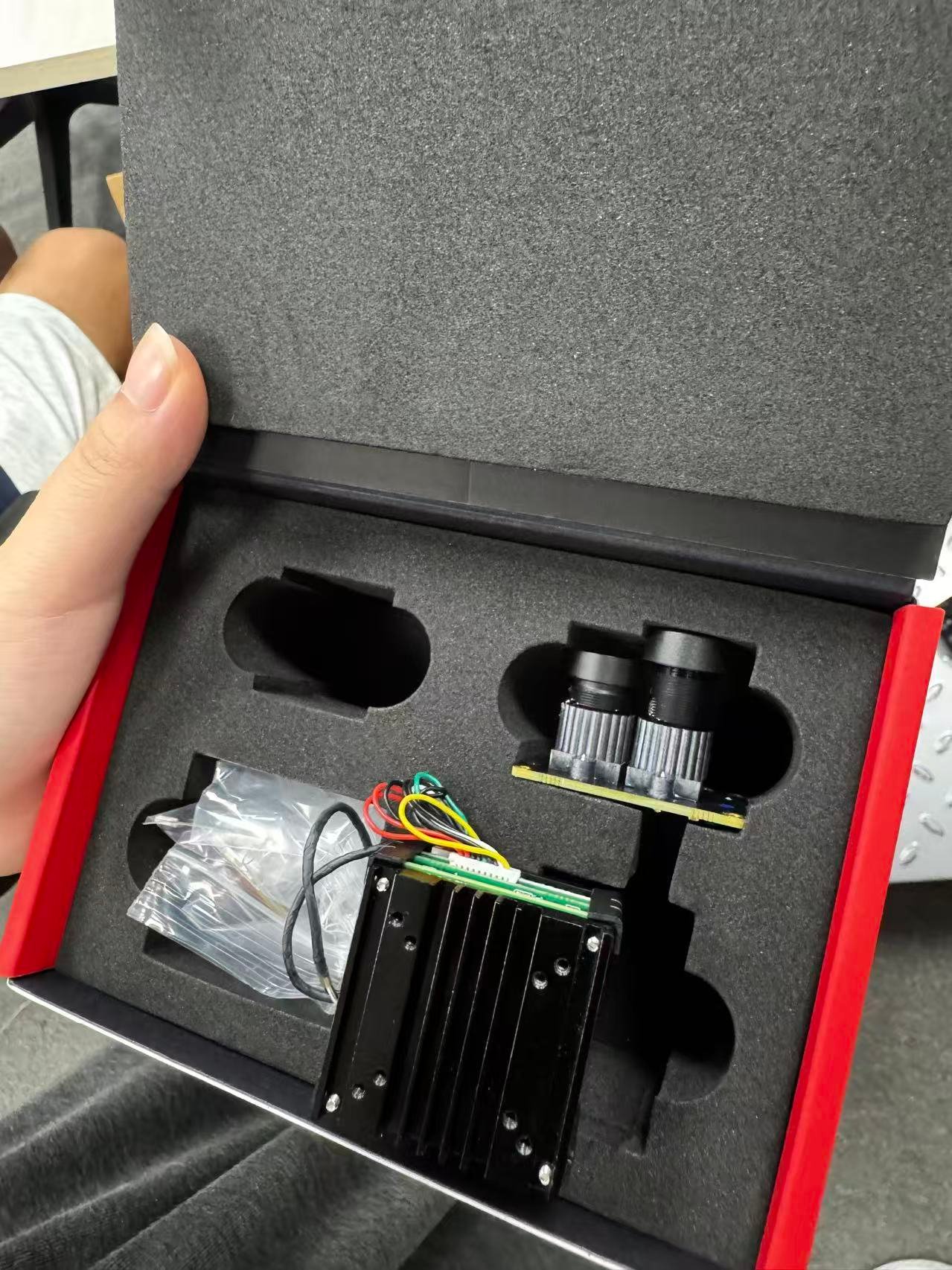
AI VisionCube is AERVUE's family of onboard AI detection modules for commercial drone platforms. The range covers 6 models from 1 TOPS to 6 TOPS, with mono visible, dual visible, and visible-plus-thermal configurations. This guide breaks down every model — S, ST, ST Pro, D, DT, DT Pro — with the specs, use-case fit, and pricing tier each one occupies, so OEM platform builders can pick the right module without spec-sheet hunting.
1. What AI VisionCube Is
An onboard AI module of this class is a 40 to 120 gram device that runs neural network inference directly on a drone airframe. It carries one or two CMOS sensors (and optionally a thermal core), a dedicated NPU running a quantized YOLO model, and a tracking algorithm that maintains target IDs across frames. The output is structured telemetry — target ID, position, velocity, class, confidence — streamed to the flight controller over CRSF or MAVLink at 30 to 60 Hz.
What makes this a family rather than a single product is the spread across compute tier, sensor configuration, and operating envelope. A platform builder running a 3-inch agriculture drone in daylight has very different needs from one building a 15-inch ISR platform for long-range night surveillance. The product range covers both extremes and the points in between.
All six models share the same software stack, the same telemetry protocols, and the same OEM customization options — so moving up or down the range as platform requirements change is straightforward.
2. The AI VisionCube Range at a Glance
Before diving into each model individually, here is the full range side-by-side:
| Model | TOPS | Visible Sensor | Thermal Sensor | Vehicle Range | Person Range |
|---|---|---|---|---|---|
| VisionCube S | 1 | Mono 4mm | — | 450m | 170m |
| VisionCube ST | 1 | Mono 4mm | 384×288 / 25Hz | 450m | 170m |
| VisionCube ST Pro | 1 | Mono 4mm | 640×512 / 50Hz | 450m | 170m |
| VisionCube D | 6 | Dual 3.9+12mm | — | 1.2km | 500m |
| VisionCube DT | 6 | Dual 3.9+12mm | 384×288 / 25Hz | 1.2km | 500m |
| VisionCube DT Pro | 6 | Dual 3.9+12mm | 640×512 / 50Hz | 1.2km | 500m |
The naming convention is simple. The first letter is the visible-camera configuration — S for single visible sensor, D for dual visible. The T suffix means a thermal core is paired with the visible. Pro means the upgraded 640×512 thermal core at 50Hz rather than the 384×288 at 25Hz. From this you can decode any model name in the range.
3. Model 1 — VisionCube S — Compact 1 TOPS Tracker
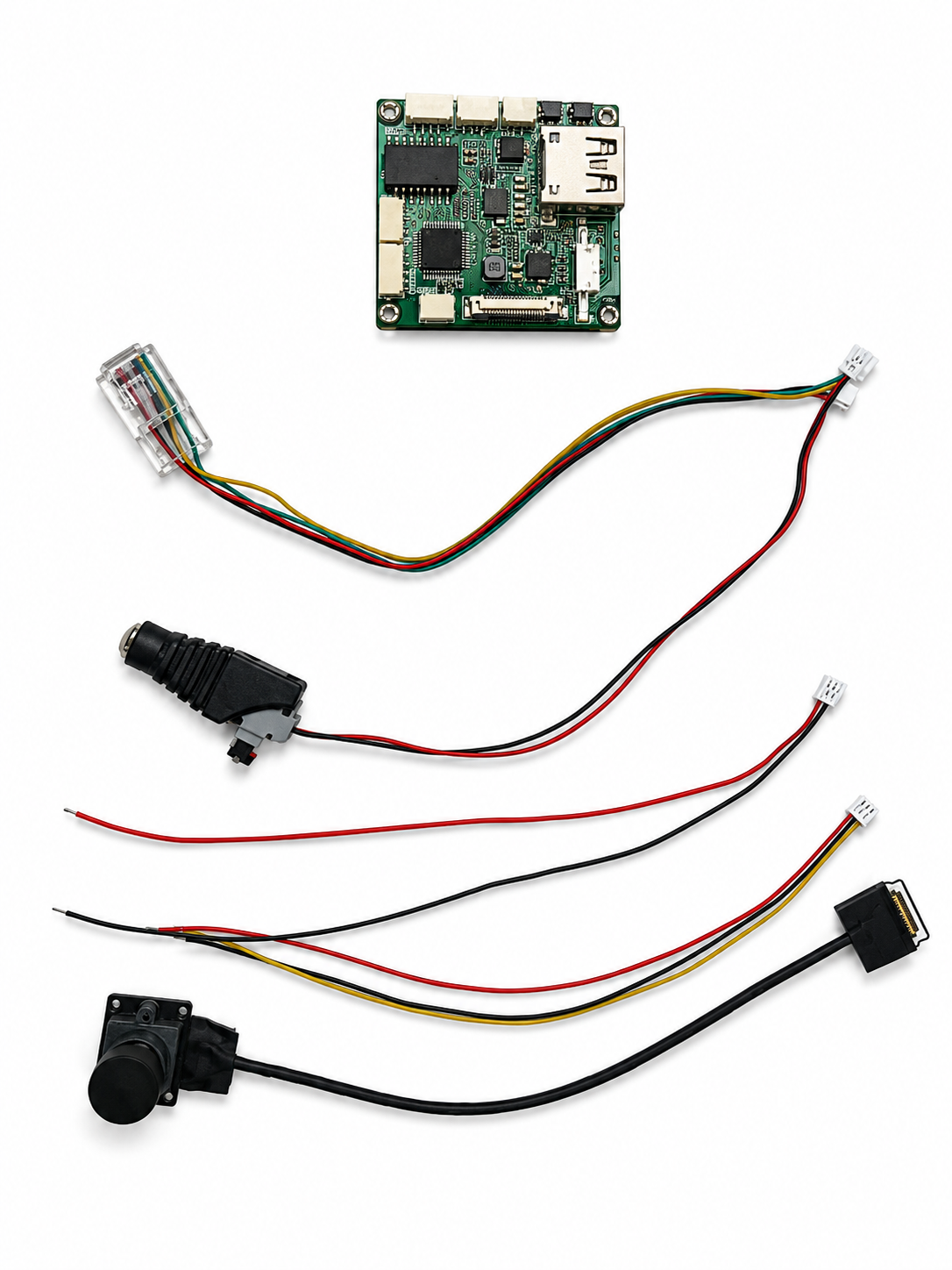
VisionCube S is the entry-level module — 1 TOPS of compute, a single visible 4mm wide-angle sensor, and the lightest form factor in the range. It runs the same YOLO model and tracker as the higher-tier modules, just on a lower-budget compute envelope.
Where S earns its place is on platforms that genuinely do not need long-range detection or multi-target tracking. For an agricultural drone flying at fixed altitude with simple targets to detect, or a daytime inspection drone working at short range, the headroom of a 6 TOPS module is wasted budget — both weight and BOM cost. S handles single-target lock and basic multi-target scenes at 30Hz, which is enough for the majority of daylight commercial work.
For platforms operating beyond about 500m, or those that need to track multiple fast-moving targets in a busy scene, step up to D or one of the thermal-paired models.
4. Model 2 — VisionCube ST — Cost-Effective Day/Night Tier
VisionCube ST takes the S baseline and adds a 384×288 uncooled LWIR thermal core. This is the cheapest entry into 24-hour operation in the range, and it matters because the single biggest capability jump in commercial drone AI is the move from visible-only to visible-plus-thermal. The moment a platform needs to operate at night, in fog, or through smoke, a visible-only module like S fails — and the visible sensor on a smartphone is more capable than what most drones carry at altitude.
For search and rescue teams looking for missing persons after dark, ST is the standard cost-effective fit. The 384 core has enough resolution to detect a human-size target at standard SAR ranges, and the 1 TOPS compute is enough to run inference on both feeds and fuse them.
If the platform operates beyond about 1km, or tracks fast-moving thermal targets like vehicles, the 25Hz thermal frame rate of ST starts to limit performance. That is where ST Pro earns the upgrade.
5. Model 3 — VisionCube ST Pro — Upgraded Thermal Resolution
VisionCube ST Pro keeps the 1 TOPS compute and mono visible setup of ST, but upgrades the thermal core to 640×512 at 50Hz. That is 2.7 times more pixels per thermal frame and double the frame rate — a significant capability jump for two specific operating conditions.
First, long range. The extra pixels translate directly into longer thermal detection range and higher classification confidence at the edge of range. For platforms operating beyond about 1km in thermal-only conditions, ST Pro reliably confirms targets that the 384 core in ST can only suggest.
Second, moving targets. 25Hz versus 50Hz on thermal is the difference between smooth tracking of a fast-moving thermal target and seeing it as a series of jumps. For vehicles, vessels, or persons in pursuit, the 50Hz core in ST Pro holds lock far more reliably than the 25Hz core in ST.
ST Pro is the right choice when thermal performance matters more than dual-visible compute headroom. For platforms that also need long visible-range detection or multi-target tracking, look at DT or DT Pro instead.
6. Model 4 — VisionCube D — 6 TOPS Dual Visible
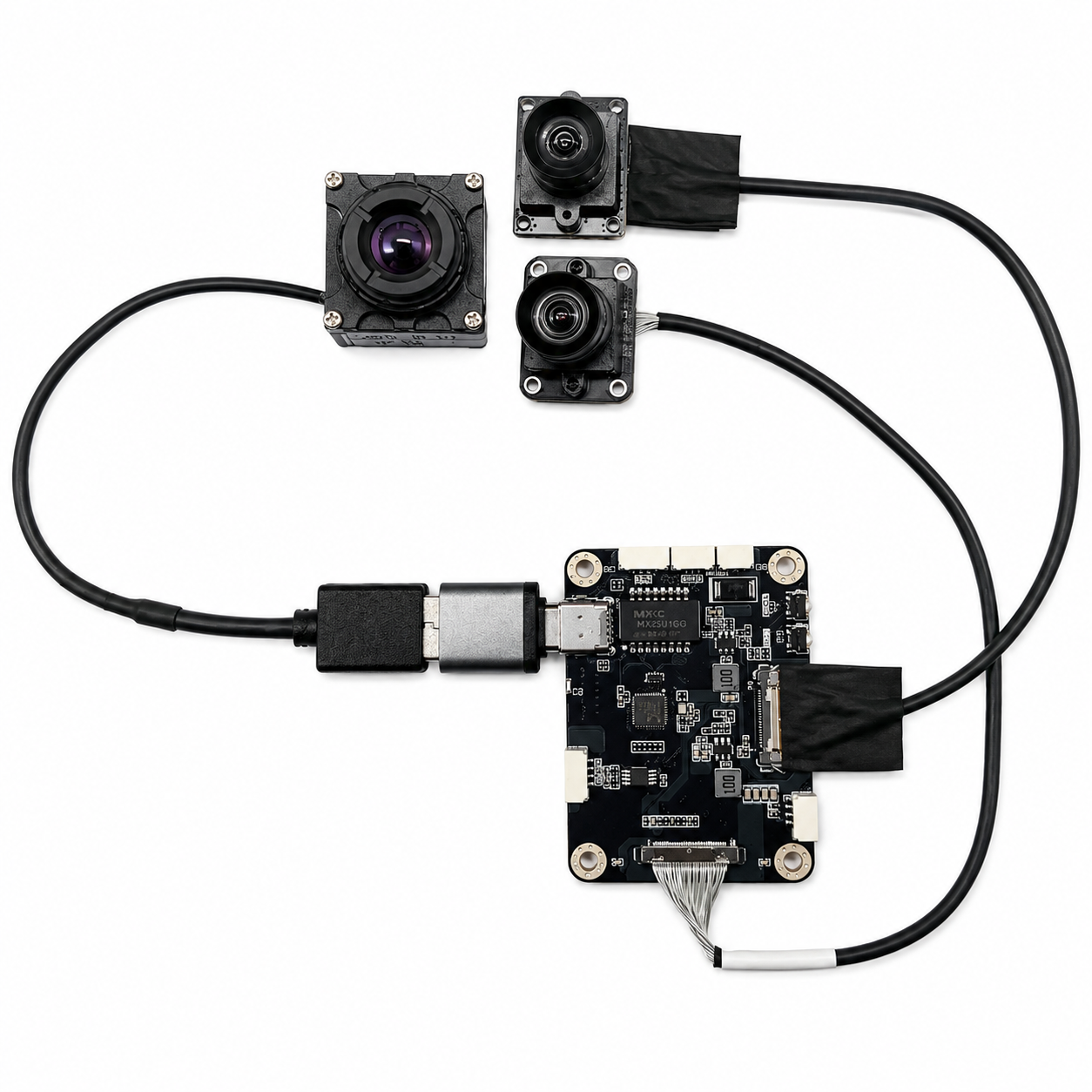
VisionCube D is where the range steps up significantly. Six times the compute of the S tier, dual visible cameras with wide and telephoto pairing, and detection ranges that roughly double across the board — 1.2km on vehicles, 500m on persons. The dual-camera setup is what drives the range gain: the wide sensor handles situational awareness, the telephoto handles detail at distance, and the model uses both viewpoints to detect targets the single-camera S would miss.
D is the right module for any daytime platform operating beyond about 500m. Urban surveillance with mid-range distances, counter-UAS scenarios where targets are small and fast, multi-target prosecution in busy scenes, and maritime daylight patrol all sit squarely in this tier. The 60Hz inference rate also matters for fast-moving targets — at 30Hz on S, a vehicle traveling 80 km/h moves about 0.75 m between frames; at 60Hz on D, it moves half that, which makes tracker association far more reliable.
For 24-hour operation, step up to DT or DT Pro to add a thermal sensor.
7. Model 5 — VisionCube DT — Long-Range Day/Night
VisionCube DT combines the dual-visible setup of D with the 384×288 thermal core from ST. The 6 TOPS compute runs inference on all three sensors simultaneously, and the model can fuse detections across feeds — which improves reliability across mixed lighting and obscurant conditions far beyond what any single sensor delivers.
This is the working configuration for platforms that need long-range detection and operate across the day-night cycle, but where the operating envelope does not justify the 640 thermal core. Urban surveillance at dusk and dawn, industrial sites at night, perimeter security through fog — all fit DT cleanly. The 384 core is enough resolution for human-size targets at standard surveillance ranges and vehicle-size targets out to about 800m thermal.
For range or thermal-target speed beyond DT's envelope, DT Pro is the flagship.
8. Model 6 — VisionCube DT Pro — Flagship Long-Range ISR
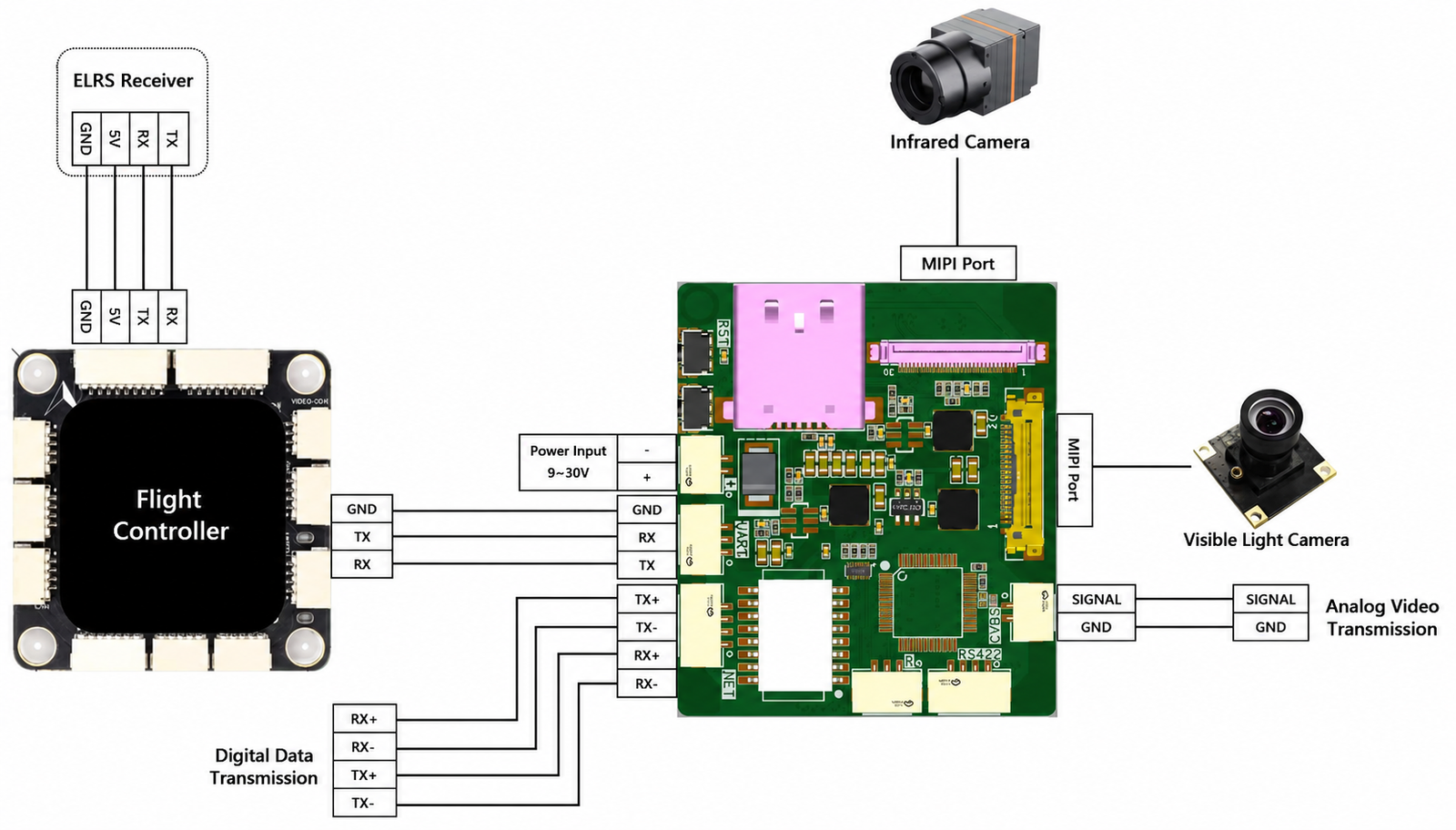
VisionCube DT Pro is the flagship of the range. 6 TOPS compute, dual visible cameras, and the upgraded 640×512 thermal core at 50Hz — every capability dial pushed to the top. It is the only module in the range with a 5-tier pricing structure (Sample, Starter, Production, Volume, Bulk) because Bulk-tier OEM customers exist at this configuration.
What DT Pro buys over DT is the same upgrade ST Pro buys over ST, applied at the 6 TOPS tier: 2.7× more thermal pixels and 50Hz versus 25Hz. The practical impact is twofold. Long-range thermal targets get confirmed rather than guessed — for platforms operating beyond about 1.5km at night, the 640 core is the difference between an actionable detection and a fuzzy blob. And fast-moving thermal targets — vehicles, vessels, persons in pursuit — hold lock at 50Hz where they would jump frames at 25Hz.
DT Pro is overkill for platforms that do not need both long range and 24-hour operation. It is the right choice for ISR-class platforms where missing the target is not acceptable, and it pairs naturally with longer-flight-time airframes that justify the slightly higher SWaP cost.
9. Picking the Right AI VisionCube Model
The selection decision across the AI VisionCube range comes down to three questions:
| Question | If yes | If no |
|---|---|---|
| Need detection beyond 500m? | D, DT, DT Pro (6 TOPS dual-visible) | S, ST, ST Pro (1 TOPS mono) |
| Need 24-hour or low-light operation? | ST, ST Pro, DT, DT Pro (thermal-paired) | S or D (visible-only) |
| Need long-range thermal or fast thermal targets? | ST Pro or DT Pro (640 thermal at 50Hz) | ST or DT (384 thermal at 25Hz) |
Answer those three and the model picks itself. A daytime agriculture drone at short range: S. A perimeter security platform that needs night vision: ST. An ISR platform doing border patrol at long range: DT Pro. The framework holds for almost any commercial application.
If your platform genuinely sits between two models, default to the lower tier — wasted compute is wasted budget, and the savings compound across volume. For a deeper view of how 1 TOPS vs 6 TOPS maps to operational scenarios, see our companion guide on choosing a drone AI tracking module.
10. Shared Platform Features Across the Range
Every model in the range — S through DT Pro — shares the same underlying platform. This matters because it means moving between models during platform development does not change the integration work.
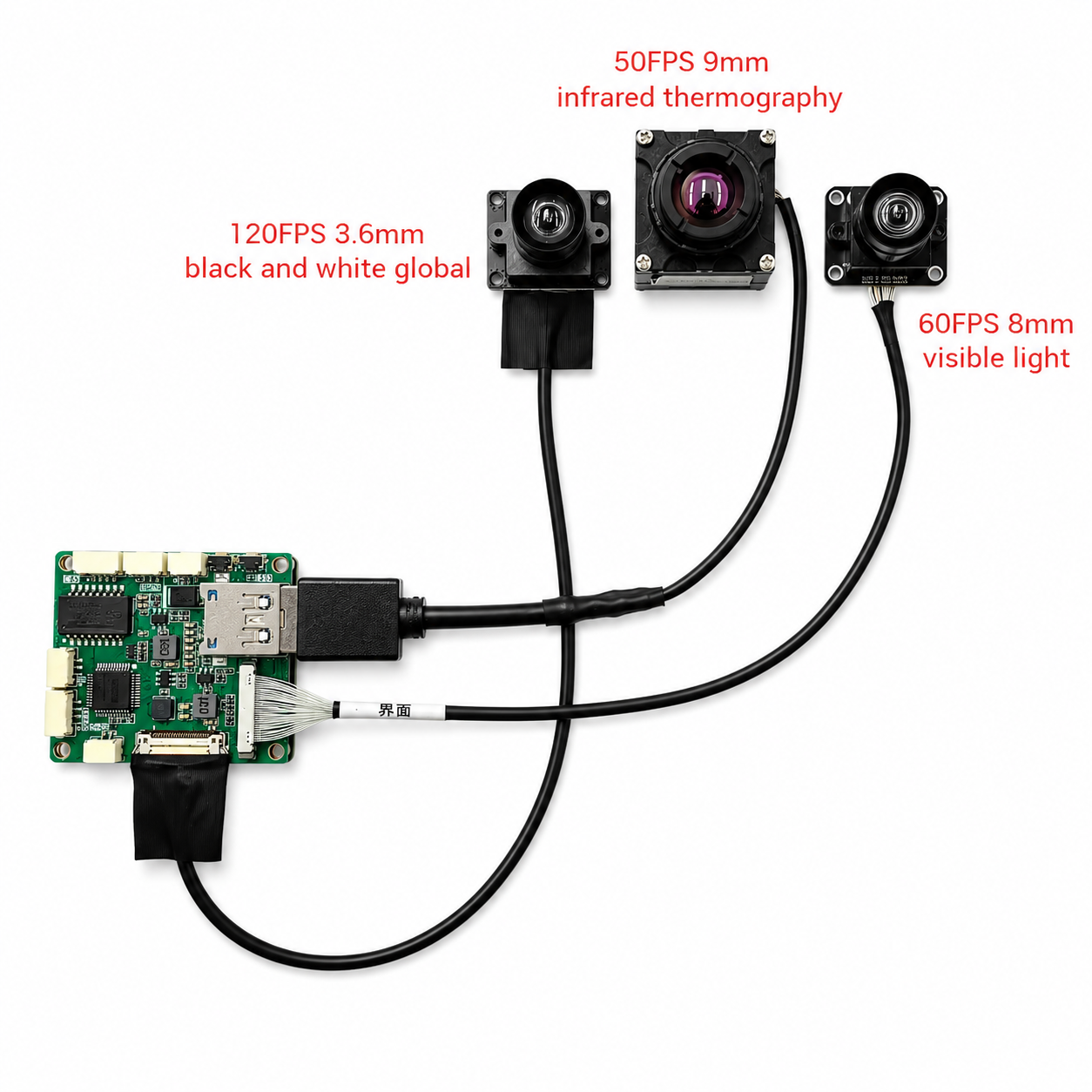
- Pre-trained classes. All models ship trained for vehicle and person detection. Custom classes available via factory service at MOQ 100+.
- Target capacity. Up to 50 simultaneous tracked targets across the range.
- Telemetry. CRSF native on all models; MAVLink option on D, DT, and DT Pro for ArduPilot and PX4 integration.
- Lock time. 0.5 second from designation to track.
- Maximum target speed. 80 km/h held lock across the range.
- Power. 9–16V across all models. Power draw 3–5W for the S tier, 5–9W for the D tier.
- Mounting. 25.5mm standard mount.
- OTA upgrade path. Supported on D, DT, and DT Pro for post-deployment model updates.
- OEM customization. Branded housing, custom OSD watermark, and custom detection classes available on the full range.
- Use restriction. AI VisionCube is supplied for civil and commercial use. Custom training and detection model work follow the same civil-use scope.
For OEM platform builders working through the full integration picture — from edge AI architecture to custom model training — the companion guides on edge AI for drones and custom AI detection models for drones cover the surrounding decisions.
11. Frequently Asked Questions
AI VisionCube is AERVUE's family of onboard AI detection and tracking modules for commercial drones. The range covers 6 models from 1 TOPS to 6 TOPS, with mono visible, dual visible, or visible-plus-thermal sensor configurations. All models ship pre-trained for vehicle and person detection and output target telemetry over CRSF or MAVLink to the flight controller.
AI VisionCube S is the 1 TOPS entry-level module with a single visible camera (4mm lens), 450m vehicle detection, and the lightest form factor. AI VisionCube D is the 6 TOPS dual-visible module with 3.9mm wide and 12mm telephoto cameras, 1.2km vehicle detection, and 60Hz inference for fast-moving targets. D is the choice when range or multi-target tracking matters.
DT means Dual visible plus Thermal. AI VisionCube DT pairs a 6 TOPS dual-visible setup with a 384×288 uncooled thermal core for 24-hour operation. AI VisionCube DT Pro upgrades the thermal core to 640×512 at 50Hz, which has 2.7× more pixels per frame and tracks moving targets reliably at long range — the flagship configuration for ISR, border surveillance, and maritime patrol.
Any model with a T in the name. AI VisionCube ST and DT use a 384×288 thermal core; ST Pro and DT Pro use a 640×512 core. Thermal sensors detect emitted infrared radiation, so they work in total darkness, fog, smoke, and through some lightweight concealment. For platforms operating beyond about 1km at night, the 640 core (ST Pro or DT Pro) is the practical choice.
AI VisionCube pricing is tiered by volume — Sample, Starter, Production, and Volume — with sample lead time of 1 to 3 days. The S model starts at the entry-level price point; DT Pro is the flagship and is priced accordingly. Specific pricing is provided on quotation request, and OEM customers above 100 units receive Production tier pricing.
All models ship pre-trained for vehicle and person detection. Custom detection classes — specific vehicle types, vessel categories, machinery, livestock — are available as a factory service at MOQ 100 or higher. The retraining process takes 1 to 3 weeks once a labeled dataset is provided, and deployment uses the same firmware path as the stock model.
Conclusion: One Range, Six Operating Points
The AI VisionCube range covers the spectrum from a cost-optimized daytime tracker to a flagship long-range ISR module without breaking the integration model. Every model uses the same software stack, the same telemetry protocols — including the open CRSF protocol standard — and the same OEM customization scope, so the choice between them comes down to mission requirements, not platform-level rework.
For OEM platform builders, the practical takeaway is to match the model to the genuine operating envelope: visible-only for daytime, thermal-paired for 24-hour operation, 6 TOPS dual-visible for long range or multi-target tracking, and the upgraded 640 thermal core when long-range thermal performance matters. Picking the lowest tier that meets the mission is the right default; over-spec wastes weight and BOM cost.
If you are scoping a new platform and want to know which AI VisionCube fits before requesting samples, our engineering team can match a model to your airframe, mission profile, and detection range requirements — usually within 24 hours of receiving the spec.
Which AI VisionCube fits your drone platform?
Tell us your airframe, mission profile, and detection range requirements. We will recommend the right AI VisionCube model and sensor configuration — factory-direct pricing and sample availability within 1–3 days.