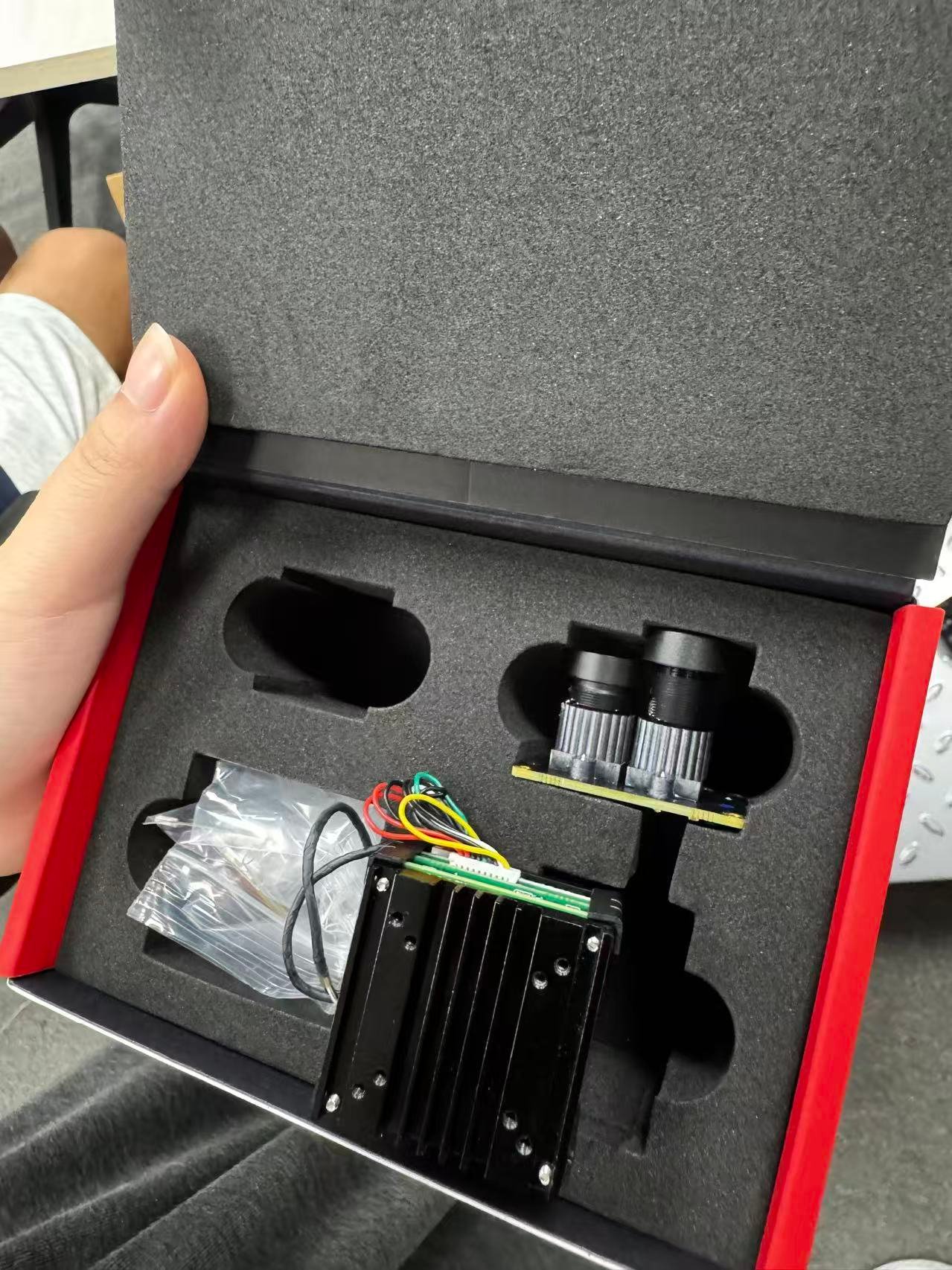
Custom AI detection models for drones let an OEM platform recognize target classes far beyond the factory defaults of vehicles and persons — specific vehicle types, vessels, machinery, livestock, or particular drone models. This guide walks through the full 6-step workflow OEMs use to train, optimize and deploy a custom model on an onboard AI module: defining classes, collecting and labeling a dataset, training, quantizing, validating and deploying — plus what it realistically costs and when to outsource it to the factory.
1. What Custom AI Detection Models for Drones Actually Are
Every commercial drone AI module ships with a pre-trained model. That model recognizes a fixed set of classes — almost always "vehicle" and "person", sometimes "vessel" or "drone". For a large share of commercial work that is enough.
It stops being enough the moment your application needs to detect something the stock model was never trained on. A custom AI detection model for drones is a neural network retrained to recognize your specific target classes, optimized for your module's NPU, and deployed to the airframe so the drone identifies those targets onboard in real time.
The base architecture is usually unchanged — a YOLO variant, the same one the stock model uses. What changes is the training data and the output classes. You feed the network thousands of labeled examples of the new targets, it learns to recognize them, and the resulting model slots into the same inference pipeline that ran the stock model. Frame rate, latency and power draw stay essentially the same — class count is not what drives inference cost.
This matters because it means custom detection is an incremental change, not a different product. If your module runs stock YOLOv7 at 60Hz, a custom YOLOv7 with your classes runs at the same 60Hz. The hardware does not care whether it is detecting two classes or twenty.
2. When Stock Classes Aren't Enough
The decision to invest in custom AI detection models for drones comes down to one question: does your mission depend on recognizing something the stock "vehicle / person" model cannot distinguish? Common triggers:
- Vehicle sub-types. The stock model sees "vehicle". Your mission needs to separate trucks from cars, or military vehicles from civilian, or tracked from wheeled.
- Marine and specialized vessels. Distinguishing vessel categories — fishing boats, cargo, fast craft — for maritime patrol or fisheries enforcement.
- Infrastructure assets. Detecting insulators, transformers, solar panels, pipeline joints, or corrosion for automated inspection.
- Agriculture. Counting livestock, detecting crop disease patterns, or identifying specific equipment in a field.
- Counter-UAS. Recognizing specific drone models or distinguishing drones from birds at range.
- Wildlife and conservation. Detecting and counting specific animal species from altitude.
If your application fits the stock classes, do not pay for custom training — it adds cost and lead time for no benefit. Custom models earn their keep only when the mission genuinely needs a class the factory model does not provide.
3. The 6-Step Custom Model Workflow
Producing custom AI detection models for drones follows a consistent pipeline regardless of vendor. Each step gates the next — a weak dataset cannot be rescued by good training, and a great model that fails quantization will not run on the NPU.
The sections below walk through each step with the practical detail OEM buyers need to scope a project — whether you run it in-house or hand it to the factory.
4. Step 1 — Define the Detection Classes
The most common reason custom AI detection models for drones underperform is a poorly defined class list. Before any data is collected, answer three questions for each class:
Is the class visually distinct from drone altitude? Two classes that look nearly identical from 100m up — say two sedan models — will confuse the model no matter how much data you throw at it. If humans cannot reliably tell them apart in your drone footage, the model will not either.
How many classes do you actually need? Every class added increases the dataset and labeling burden. Resist the urge to define 40 classes when the mission needs 4. A tight class list trains faster, validates cleaner, and performs better in the field.
What is the hard-negative set? Just as important as what to detect is what to reject. A counter-UAS model that flags every bird as a drone is useless. Define the confusable non-targets early so the dataset includes them as negatives.
5. Step 2 — Collect the Drone Dataset
This is the step that makes or breaks a custom drone detection model, and it is the step most underestimated. The model only learns what the dataset shows it. A dataset of targets shot from the ground will not train a model that works from 120m altitude looking down.
The dataset must mirror deployment conditions. If the platform flies at dawn and dusk, the dataset needs dawn and dusk frames. If it operates over water, it needs water backgrounds. If the module has a thermal sensor, the dataset needs thermal imagery of the targets, not just visible. A model trained only on clean midday visible footage will collapse the first time it sees fog, glare, or a thermal frame.
For specialized targets where no public dataset exists, collection means flying your own drone over the targets and recording — or commissioning a data vendor to build a drone-viewpoint dataset to your specification. Public aerial datasets like VisDrone help for common classes but rarely cover specialized OEM targets.
6. Step 3 — Label and Augment the Data
Raw imagery is not training data until it is labeled. Labeling means drawing a tight bounding box around every instance of every target class in every frame, and tagging it with the correct class. For a 5,000-image dataset with multiple targets per frame, this is tens of thousands of boxes.
Label quality beats label quantity
Loose, inconsistent, or missed boxes teach the model bad habits. A smaller, cleanly labeled dataset outperforms a larger sloppy one. Boxes should be tight to the object, consistent across annotators, and complete — a missed target in training becomes a missed target in the field.
Augmentation extends the dataset
Augmentation synthetically expands the dataset by transforming existing images — rotation, scaling, brightness shifts, horizontal flips, and mosaic combinations. This teaches the model to recognize targets at different scales and orientations without collecting more raw data. For drone imagery, scale and rotation augmentation matters most, because targets appear at wildly different sizes and angles depending on altitude and heading.
7. Step 4 — Train the Model
With a labeled dataset, training fine-tunes the base model on the new classes. For a custom drone detection model, this almost always means starting from a pre-trained YOLO checkpoint rather than training from scratch — transfer learning lets the model reuse general feature detection and only learn the new classes, which needs far less data and time.
The key signal to watch during training is validation mAP (mean Average Precision) — accuracy measured on data the model has not seen. Training mAP always looks good; validation mAP is the honest number. If validation mAP plateaus well below training mAP, the model is overfitting — memorizing the training set instead of learning to generalize. The fix is more data, stronger augmentation, or fewer training epochs.
Practical note: Training itself is fast on modern GPUs — often a few hours for a fine-tune. The time sink is everything around it: dataset collection, labeling, and the iterative loop of train, evaluate, find the failure cases, add data, retrain. Budget the schedule around data work, not GPU time.
8. Step 5 — Quantize and Compile for the NPU
A trained model running in FP32 on a desktop GPU cannot run on a drone NPU at real-time frame rate. This is the step that turns a working model into a deployable one, and it is where a custom drone detection model most often runs into trouble if the team lacks NPU experience.
Quantization converts the model from 32-bit floating point to INT8 integer math, shrinking it roughly 4x and letting the NPU's integer hardware run it at full speed. Done well, this costs 1 to 3 points of mAP. Done poorly — without quantization-aware training or proper calibration — it can cost 10 or more, gutting the accuracy you worked to build.
Compilation maps the quantized model onto the specific NPU's instruction set and memory layout, using the vendor's toolchain (TensorRT for NVIDIA, vendor-specific tools for Rockchip, Hailo, EdgeCortix and others). This step is hardware-specific and is the single biggest reason custom training is usually a factory service: the toolchain that compiles for a given module's NPU is rarely exposed to customers.
9. Step 6 — Validate and Deploy
Bench accuracy is not field accuracy. Before deployment, the compiled model must run on the actual module against real or representative footage — ideally footage from the deployment environment. Watch for three failure modes:
- Condition gaps. The model nails clean footage but fails in fog, glare, or motion blur — a sign the dataset missed those conditions.
- False positives on hard negatives. The model flags confusable non-targets, meaning the negative set was too thin.
- Range falloff. Detection is solid up close but collapses at the edge of operating range, where targets are small — often a resolution or thermal-core limit, not a model problem.
Once validated, deployment happens one of two ways: flashed at the factory before shipment, or pushed via OTA firmware update to fielded units. Modules with documented OTA support are far more valuable here — they let you ship hardware now and deploy or improve the custom model later without retrofitting. This is one of the strongest arguments for choosing an open-firmware module over a locked one, a point covered in our guide to edge AI for drones.
10. Self-Train vs Factory Service: Which to Choose
The practical question for most OEMs is not how to build custom AI detection models for drones from scratch, but whether to do it in-house or hand it to the module vendor. Both are valid; the right choice depends on volume, in-house ML capability, and how often the model will change.
| Factor | Self-train in-house | Factory service |
|---|---|---|
| Best when | You have ML staff and the model changes often | One-time custom model, no in-house ML team |
| NPU toolchain | Must obtain vendor toolchain access | Vendor handles compilation |
| Dataset | You collect and label | You supply, or vendor sources at cost |
| Typical MOQ | n/a | 100+ units |
| Lead time | Depends on your team | 1–3 weeks after dataset is ready |
| Control | Full, including future retrains | Limited to vendor's process |
In practice, most commercial vendors — AERVUE included — handle custom training as a factory service at MOQ 100 or higher, because the quantization and NPU compilation steps are vendor-specific and rarely exposed. If you expect to retrain frequently as your target set evolves, negotiate toolchain access up front; if it is a one-time custom class set, the factory service is usually faster and cheaper than building the capability in-house.
For help matching a module tier and sensor configuration to your detection requirements before committing to custom training, see our companion guide on choosing a drone AI tracking module.
11. Frequently Asked Questions
Custom AI detection models for drones are neural networks trained to recognize target classes beyond the factory defaults of vehicles and persons — for example specific vehicle types, vessel categories, machinery, livestock, or particular drone models. The model is trained on a labeled dataset of the new classes, optimized for the onboard NPU, and deployed to the AI module via firmware.
A practical custom class needs roughly 1,500 to 5,000 labeled images per class for reliable detection, captured from drone viewpoints across the altitudes, angles, and lighting your platform will operate in. Fewer images can work for distinctive objects; visually similar or small targets need more.
Both are possible. Self-training requires GPU resources, a labeled dataset, and access to the vendor compiler toolchain to deploy the model to the specific NPU. In practice most commercial vendors handle custom training as a factory service at MOQ 100 or higher, because the toolchain and quantization step are vendor-specific and rarely exposed to customers.
Once a labeled dataset exists, training and optimization typically takes 1 to 3 weeks: dataset review and augmentation, model training, INT8 quantization, accuracy validation, and on-device testing. Dataset collection and labeling, if starting from scratch, usually takes longer than the training itself.
Yes, if the custom model uses the same architecture and is quantized for the same NPU. Adding classes does not increase inference cost meaningfully — a YOLOv7 model detecting 20 classes runs at essentially the same speed as one detecting 2 classes on the same hardware. Frame rate is set by the architecture and TOPS, not class count.
On modules with documented OTA firmware support, yes. A retrained model can be packaged and pushed to deployed units without retrofitting hardware. This is one of the strongest reasons to choose a module with an open OTA path over a locked-firmware product.
Conclusion: Custom Models Are Within Reach for OEMs
Custom AI detection models for drones used to be the exclusive domain of large defense contractors with dedicated ML teams. In 2026 they are within reach of any commercial OEM that can define its classes, supply a representative dataset, and pick a module with a vendor willing to train and deploy. The architecture is mature, the tooling is proven, and the cost of a custom model is small relative to the value of detecting targets the stock model cannot.
The decision is rarely technical — the technology works. It is about whether your mission genuinely needs a class the factory model does not provide, and whether the volume justifies the custom-training MOQ. If both are true, a custom model turns a generic detection module into one purpose-built for your application.
If you are scoping a custom detection project and want to know what is feasible on a given module — dataset requirements, achievable accuracy, lead time and MOQ — our engineering team can assess your target classes and recommend the right module and training path before you commit.
Need a custom detection model for your drone platform?
Tell us your target classes, operating conditions, and volume. We will assess feasibility, dataset requirements, and lead time — with factory-direct pricing on the module and training together.