The analog vs digital FPV debate dominates hobbyist forums — but commercial drone manufacturers ask the question differently. For OEM platform builders, the decision involves latency tolerances, per-unit cost at volume, supply chain control, and OEM customization capability. This guide addresses the comparison from a factory-direct manufacturing perspective, not a racing pilot's.
1. Analog vs Digital FPV: The Core Question
FPV (First Person View) video systems transmit a live camera feed from the drone to the pilot's display. The technology used to transmit that signal — analog or digital — fundamentally affects latency, image quality, range, cost, and system complexity.
For hobbyist pilots, the choice often comes down to personal preference and budget. For commercial drone OEMs and platform integrators, the decision has different stakes: it affects the unit economics of your entire product line, your supply chain independence, your ability to customize, and ultimately your competitive position.
Understanding analog vs digital FPV in a commercial context means evaluating not just performance specifications, but real-world tradeoffs at production scale.
One-line summary: Analog is proven, ultra-low latency, cost-effective at scale, and fully customizable. Digital offers higher image quality but adds cost, complexity, and supply chain dependency.
2. How Analog FPV Works
An analog FPV system converts the camera's video signal into a radio frequency (RF) transmission using amplitude or frequency modulation — the same underlying principle as broadcast television. The VTX (video transmitter) on the drone sends this signal; the VRX (video receiver) on the ground receives and decodes it in real time.
Because analog transmission requires no compression, encoding, or digital processing pipeline, the signal travels from camera sensor to pilot display in under 10 milliseconds. The system is stateless — if the signal weakens, the image degrades gracefully with increasing noise rather than freezing or dropping out entirely.
Key characteristics of analog FPV
- Transmission latency: Typically 2–8ms end-to-end. The lowest latency available in any FPV system.
- Image resolution: 800–1800TVL (TV lines), equivalent to standard-definition video. Sufficient for navigation; not suitable for high-resolution recording.
- Interference behavior: Graceful degradation. Signal noise increases progressively as range increases — the pilot retains partial visibility even at the edge of range.
- Frequency bands: Typically 5.8GHz for short range; 1.2GHz and 2.4GHz for long range. Regulations vary by region.
- Component cost: A professional analog FPV camera costs $15–$80. A matched VTX/VRX pair adds $30–$150. Total system cost is a fraction of digital equivalents.
- OEM customization: Full access to sensor selection, lens configuration, housing design, voltage range, and OSD overlays. No proprietary platform dependency.
3. How Digital FPV Works
A digital FPV system captures video from the camera, encodes it into a compressed digital bitstream, transmits it over a proprietary radio link, and decodes it on the receiving end before display. The signal chain involves a full hardware encoding/decoding pipeline, which introduces processing latency.
The primary commercial digital FPV systems currently available — DJI O3/O4, Walksnail Avatar, and HDZero — are each closed ecosystems with proprietary transmitter-receiver pairing. The advantage is significantly higher image resolution and a cleaner signal in ideal conditions. The tradeoffs are higher cost, higher latency, and dependency on a single hardware supplier for both the air unit and ground station.
Key characteristics of digital FPV
- Transmission latency: 20–100ms depending on system and quality mode. High-quality modes increase latency further.
- Image resolution: 720p to 4K depending on system. Substantially higher detail than analog.
- Interference behavior: Binary dropout. Digital systems maintain quality until signal degrades past a threshold, then lose the feed entirely. No partial-image fallback.
- Frequency bands: Primarily 5.8GHz. Proprietary protocols differ per manufacturer.
- Component cost: Air unit alone costs $100–$350+. Matched goggles or display required. Higher total system cost.
- OEM customization: Severely limited. Proprietary systems do not allow housing customization, sensor substitution, or independent supply chain management.
4. Analog vs Digital FPV: Side-by-Side Comparison
| Characteristic | Analog FPV | Digital FPV |
|---|---|---|
| End-to-end latency | 2–8ms (ultra-low) | 20–100ms depending on mode |
| Image resolution | 800–1800TVL (SD equivalent) | 720p–4K |
| Signal failure behavior | Graceful — image degrades with noise | Binary — clean image then full dropout |
| Frequency bands | 1.2 / 2.4 / 5.8GHz (open) | Primarily 5.8GHz (proprietary protocol) |
| Camera cost (OEM) | $15–$80 per unit | $100–$350+ per air unit |
| Full system cost | Low — open ecosystem | High — proprietary ecosystem lock-in |
| Supply chain control | Full — multi-source components | None — single vendor dependency |
| OEM customization | Full — sensor, lens, housing, OSD | Minimal — closed platform |
| Long-range performance | Excellent with 1.2GHz systems | Limited — 5.8GHz range constraints |
| Power consumption | Low — 200–600mW typical | Higher — 1W+ for air unit |
| Ecosystem dependency | None — open standard | High — DJI / Walksnail / HDZero |
| Best for | Commercial OEM, long-range, cost-sensitive builds | Hobbyist premium, cinematic recording, short-range |
- Minimum latency for real-time UAV control
- Cost efficiency across production volumes
- Full OEM customization and branding
- Supply chain independence from any single vendor
- Long-range operation at 1.2GHz
- Graceful degradation at range limits
- High-resolution live feed for operator display
- Clean image in short-range recreational use
- Cinematic quality FPV footage recording
- Consumer product where image quality is primary selling point
5. Latency: Why It Still Defines Commercial FPV
Latency is frequently dismissed in digital FPV marketing as "imperceptible." For a recreational pilot flying a freestyle course at moderate speed, 50ms of latency may indeed be tolerable. For a commercial drone operating in a dynamic environment — navigating tight infrastructure, conducting urban SAR, or flying at speed under operator control — it is not.
At 20m/s (a common cruise speed for commercial ISR drones), a 50ms latency means the pilot is reacting to an image representing the drone's position 1 meter behind its actual location. At 100ms, that becomes 2 meters. In confined airspace, obstacle avoidance corridors, or during precision approach, these margins matter operationally.
Analog FPV systems operating at 2–8ms latency deliver a truly real-time feed. The pilot's perception of vehicle position and movement corresponds to actual state — which is why analog remains the standard for any application where precise manual control is required.
Commercial implication: If your drone platform requires operator control in dynamic or confined environments, analog FPV's latency advantage is not a hobbyist preference — it is an operational requirement.
6. Cost at Scale: The OEM Reality
The cost difference between analog and digital FPV appears modest at single-unit level. At production volume, it is substantial.
| Cost Element | Analog FPV | Digital FPV |
|---|---|---|
| Camera module (per unit) | $15–$80 | $100–$350+ |
| VTX transmitter (per unit) | $15–$60 | Bundled — no independent sourcing |
| Ground receiver (per unit) | $20–$80 | $150–$600 (proprietary display/goggles) |
| Cost at 500 units (camera only) | $7,500–$40,000 | $50,000–$175,000+ |
| Alternative supplier option | Yes — open ecosystem | No — single vendor |
| Price negotiation leverage | High — multiple suppliers | None — proprietary pricing |
For an OEM building 500 units per year, the camera module cost differential alone can represent $40,000–$130,000 in annual BOM savings. At 1,000 units, this becomes a material competitive cost advantage — the difference between a viable product margin and an uncompetitive one.
The ground station cost is equally significant. Digital FPV systems require proprietary goggles or monitors paired to the specific ecosystem. For commercial operators deploying fleets, the receiver infrastructure cost scales directly with analog's open-standard compatibility advantage.
7. Customization and Supply Chain: The OEM Differentiator
OEM drone manufacturers do not ship commodity products — they build differentiated platforms. That differentiation requires control over every component. Analog FPV systems allow this. Digital systems do not.
What analog FPV customization enables
- Sensor selection. Choose the imaging sensor — Sony Starvis, IMX462, or others — matched to your specific lighting and sensitivity requirements.
- Lens configuration. Select FOV, aperture (F1.0 available), and format to match your payload integration.
- Housing and form factor. Custom housing geometry, connector placement, mounting pattern, and IP rating to match your airframe.
- OSD overlay. Custom on-screen display with your branding, telemetry fields, and layout.
- Voltage range. Configure for your bus voltage — 5V, 9V, 12V, or direct battery input.
- Dual supplier qualification. Qualify two suppliers for critical components to eliminate single-source risk.
A digital FPV air unit is a sealed proprietary module. You can integrate it — you cannot differentiate with it, customize it, or protect yourself from its manufacturer's pricing decisions or supply disruptions.
8. Scenario Guide: Which System for Which Application?
In the analog vs digital FPV decision, application context drives the answer. Here is a breakdown by commercial drone use case:
9. AERVUE Analog FPV Camera Lineup
AERVUE supplies analog FPV cameras factory-direct across the full performance range — from cost-optimized entry models to starlight-grade cameras for night operations. All models are available for OEM customization with minimum orders from 20 units.
FPV Cameras
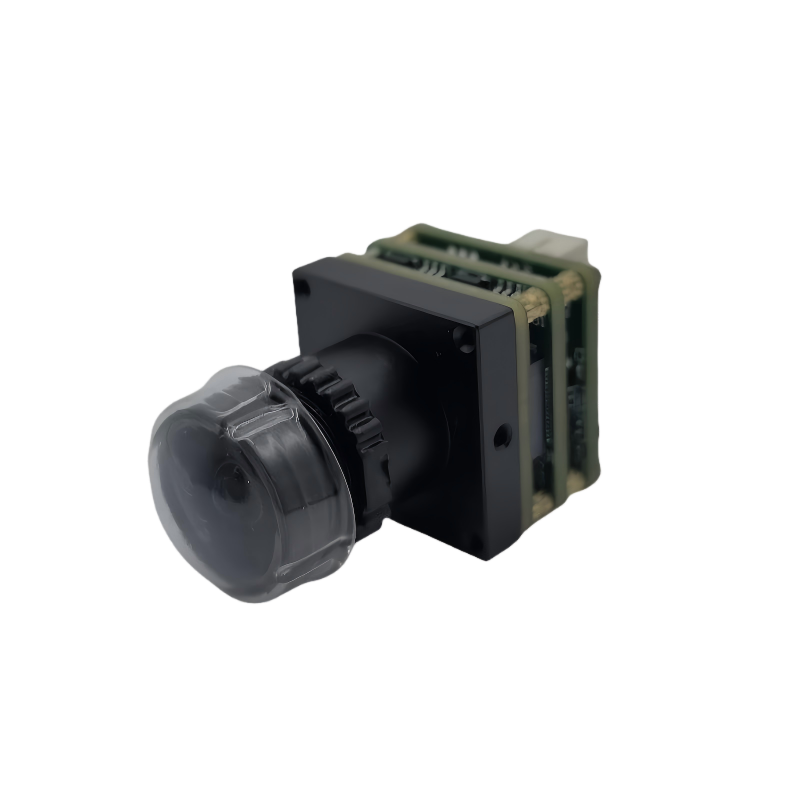
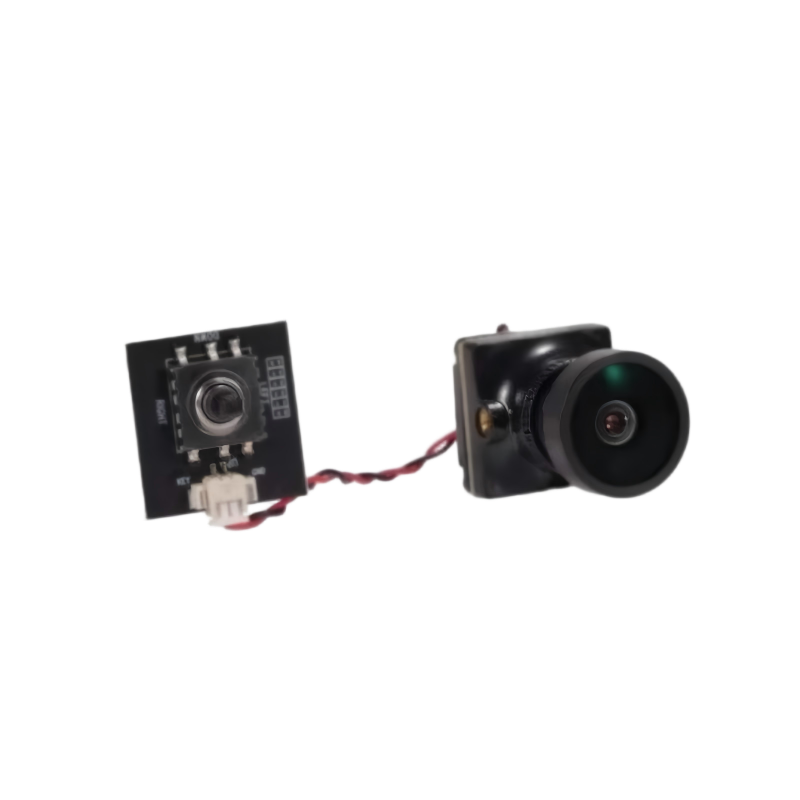
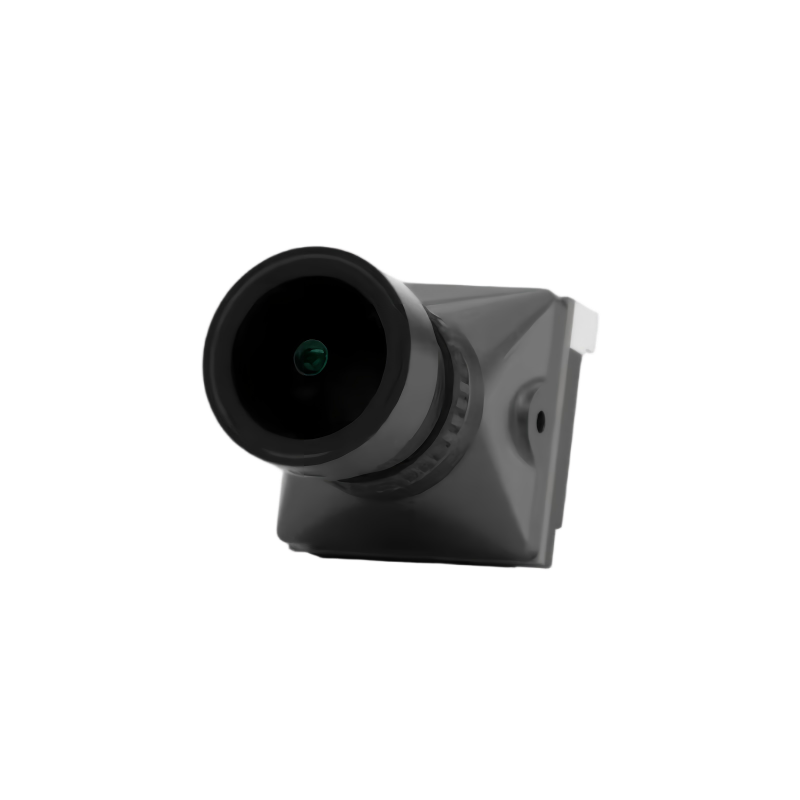
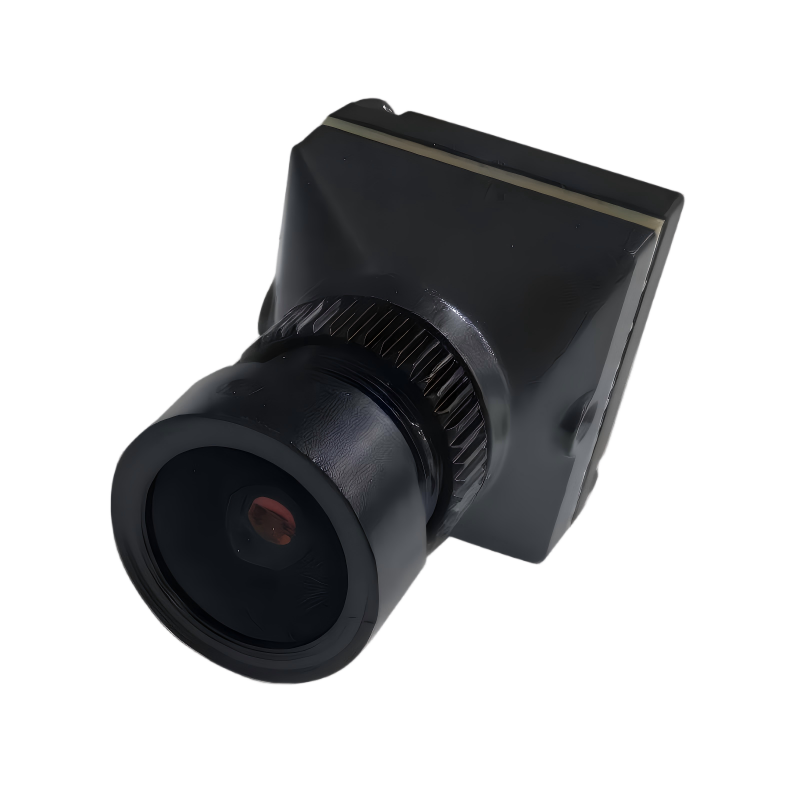
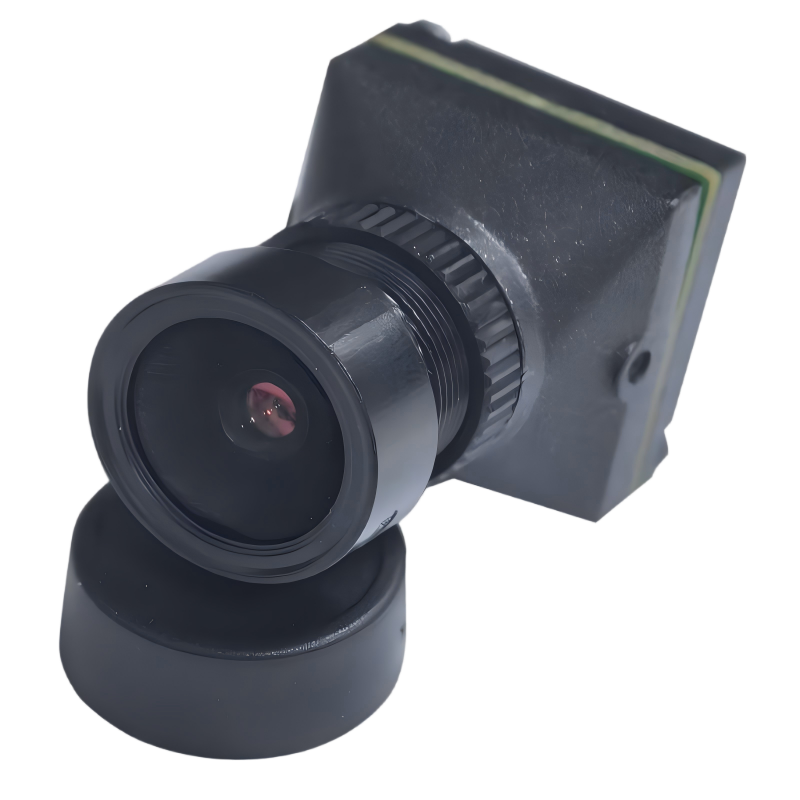
All AERVUE analog FPV cameras support OEM customization: custom housing, connector layout, OSD watermark branding, voltage configuration, and lens selection. Factory minimum order from 20 units. Contact us for OEM program details.
10. Final Checklist: Analog vs Digital FPV — Which Do You Need?
- ✅ Commercial OEM platform at any volume → Analog. Lower BOM cost, full customization, supply chain independence.
- ✅ Minimum latency required (ISR, SAR, precision navigation) → Analog. 2–8ms vs 20–100ms is an operational difference, not a preference.
- ✅ Long-range operations beyond 2km → Analog at 1.2GHz. Digital systems at 5.8GHz cannot compete at this range.
- ✅ Reliable signal at range limits → Analog. Graceful degradation keeps the pilot informed; digital systems drop entirely.
- ✅ OEM branding and custom OSD required → Analog. Digital platforms do not support this.
- ✅ Cost-sensitive build (agriculture, delivery, fleet) → Analog. $15–$80 per unit vs $100–$350+ for digital.
- ✅ 4K live feed quality is the primary product feature → Digital may be justified — with the understanding of ecosystem lock-in and higher cost.
- ✅ Cinematic recording drone (consumer product) → Digital. Image quality is the product; cost and customization are less critical.
Conclusion
The analog vs digital FPV question has a clear answer for the majority of commercial drone applications: analog wins on every commercially relevant criterion except image resolution. Lower latency, lower cost at scale, supply chain independence, and full OEM customization capability make analog FPV the rational choice for any professional platform builder.
Digital FPV has a genuine role in consumer products and cinematic applications where image quality is the primary value driver and cost or supply chain are secondary concerns. For commercial operators and OEM manufacturers, those are rarely the dominant priorities.
AERVUE supplies analog FPV cameras factory-direct across the full performance range — from entry-level S5 to starlight-grade RATEL PRO+ — with OEM customization available from 20 units. Our engineering team can advise on sensor selection, housing integration, and video system architecture for your specific platform.
Building a commercial or OEM drone platform?
Tell us your airframe, mission type, and production volume. We will recommend the right FPV camera and VTX system for your specific application — with factory-direct pricing.